Beach Shoots vs Pool Shoots for Swimwear Campaigns: Pros, Cons, and Production Tips
Swimwear sells on a feeling as much as on fit, especially when your brand needs campaign imagery that works across e-commerce, social, lookbooks, and advertising. The backdrop you choose shapes that feeling before a viewer reads a caption.
Do you want wild, sunlit freedom or clean, design-forward polish? The right location choice can support stronger campaign performance, simplify retouching decisions, and help your production team plan a safer, smoother shoot day.
This guide compares beach shoots and pool shoots so your creative team can choose the setting that best supports your swimwear campaign, launch timeline, and content needs. You will see how each location affects the look, logistics, permits, safety, and cost.
Do you want to achieve your brand goals with reliable final deliverables? Dixie Dixon’s full-service production team can help translate those details into a shoot plan that covers creative direction, location scouting, casting, crew, stills, video, and post-production.
TL;DR
Beach shoots deliver organic, adventurous vibes, but they also depend on weather, tide, and permit variables.
Pool shoots offer control, graphic lines, and smoother logistics at the cost of spontaneity.
For fast e-commerce, catalogs, or lookbooks, pools often win.
For lifestyle storytelling, launch campaigns, and PR-ready visuals, beaches shine.
Permits, drone rules, and water safety plans matter in both settings and vary by location.
Check tides and UV Index for beaches. Confirm pool clarity and pool operator rules.
A Dallas-based production team can also help compare local pool options, Texas coastal settings, and destination shoot locations based on your brand’s budget, timing, and content plan.
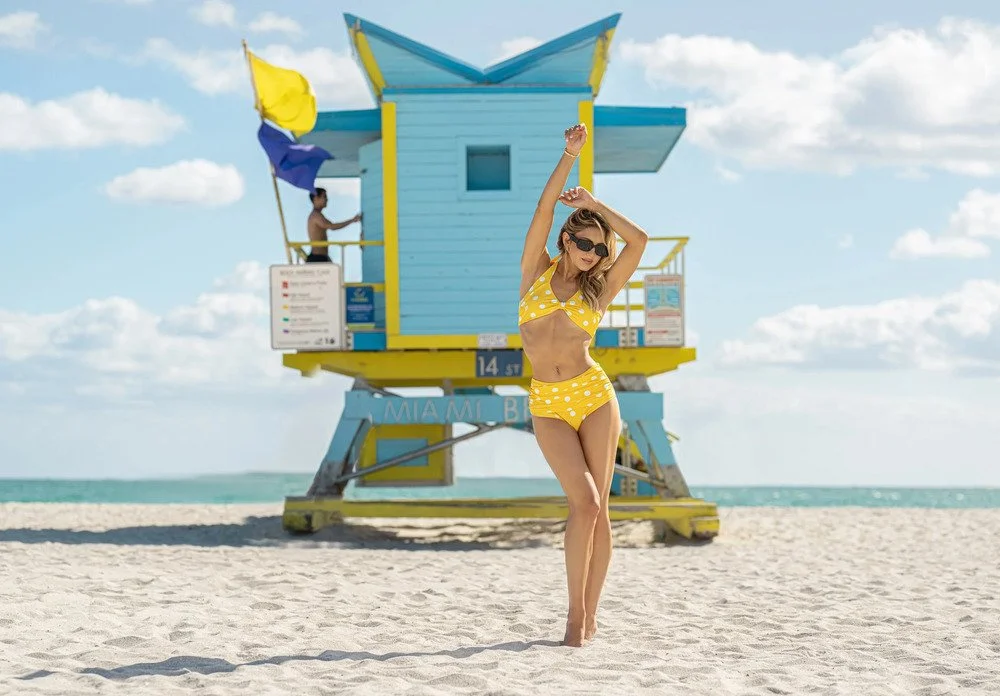
What a Beach Shoot Delivers
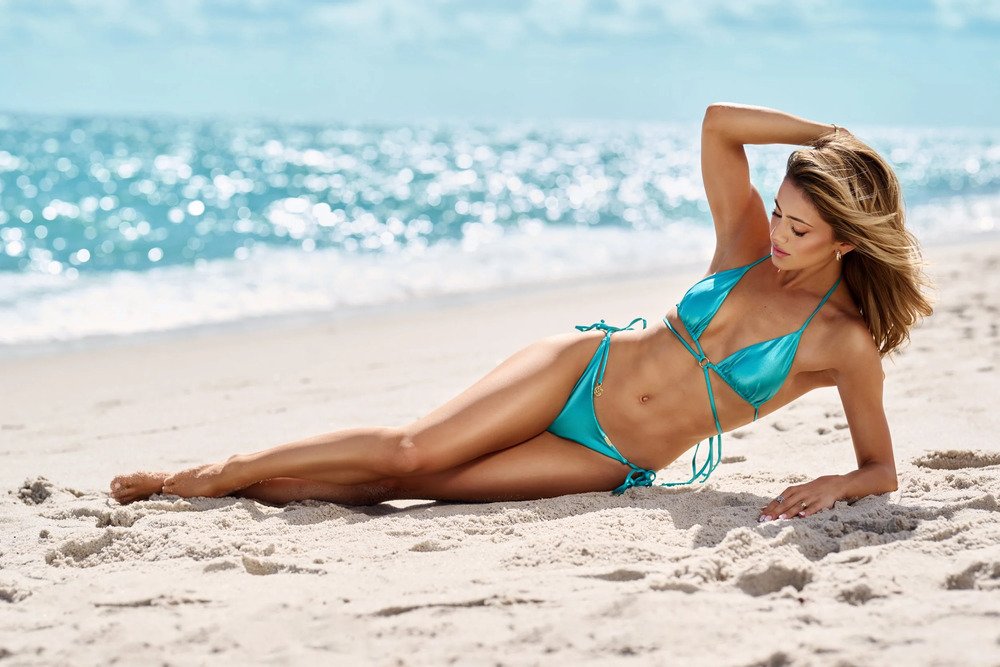
A natural beach brings scale, motion, and story without set dressing. Wind in hair, surf spray, and long horizons cue adventure and escape. Sand adds natural texture, ripples bring movement, and backlit spray can glow at golden hour.
For your brand, the trade-off is control: you gain natural energy but lose some predictability.
Light changes fast, wind kicks up, and tides can erase your plan.
Public beaches draw crowds and noise.
On managed shorelines, state parks, city beaches, county beaches, or national seashores, permit requirements depend on the managing agency, crew size, equipment, location impact, and whether the shoot needs exclusive access.
Build in buffers for scouting, tide checks, or closure.
My swimwear production team can help evaluate whether a beach concept should stay close to Texas, shift to a Gulf Coast setting, or become a destination production when the creative direction calls for a more specific shoreline, color palette, or resort feel.
What a Pool Shoot Delivers
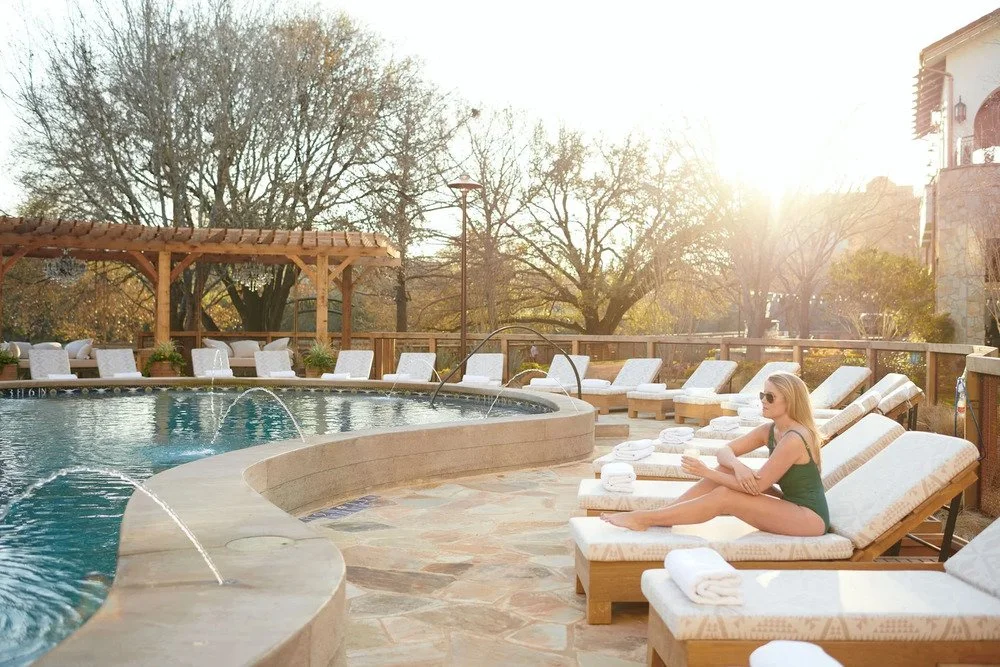
Pools give you order. You can set key and fill lights, lock focus distances, and run quick wardrobe changes. Private pools reduce the need for bystanders, simplify audio for video, and can cut travel time when the production is built around a Dallas-area home, hotel, studio-adjacent pool, or controlled resort setting.
The look skews controlled and stylized.
Hard edges, tiles, and lane lines create bold geometry that flatters modern or luxury brands.
If you want raw nature, you will need creative framing, plants, or set pieces.
Public pools follow health codes and may require approvals, lifeguards, or restricted hours.
Water chemistry and clarity affect skin tones, reflections, and underwater visibility, so coordinate with the operator before call time to help the water look clean in the photograph.
Does your brand need consistent product angles for a full swimwear lineup? My swimwear photography team can plan the pool layout, lighting approach, shot order, and post-production workflow so e-commerce images, lookbook selects, and short-form video feel cohesive.
The Visual Breakdown: Beach Shoots vs Pool Shoots for Swimwear Campaigns
We compare the core differences between open-ocean backdrops and controlled pool settings so you can quickly see where your brand’s aesthetic, schedule, and deliverables will work best. Choosing the right environment helps your swimwear take center stage with the atmosphere your audience should feel before they read a caption or click through to shop.
| Factor | Beach Shoot | Pool Shoot |
|---|---|---|
| Visual mood | Wild, aspirational, organic | Clean, graphic, controlled |
| Light control | Variable; sun, clouds, reflection off water and sand | High; flags, diffusion, and consistent angles |
| Logistics | Tides, wind, access, crowds; heavier carry‑in/out | Easier load-in, power access, nearby facilities, and faster wardrobe changes |
| Permits and rules | May need permits on managed shorelines or parks; check drone rules | Private pools need owner permission; public pools have health/operating rules |
| Safety | Surf, currents, heat, and sun exposure | Slips, chemicals, drowning risk; it's easier to staff a lifeguard |
| Time and cost predictability | Lower; weather and access can shift plans | Higher; schedules and shots run efficiently |
| Brand fit | Adventure, travel, natural lifestyle, editorial storytelling | Luxury, minimalism, resort polish, e-commerce consistency, performance testing |
| Best deliverables | Hero campaign images, launch content, Reels, PR visuals | E-commerce sets, lookbooks, catalogs, clean product angles, controlled video |
Budget, Permits, and Safety You Cannot Ignore
Protecting your team and securing the right permissions reduces the risk of unexpected interruptions, reshoots, or costly production delays. Investing time in these details gives models, crew, and clients a more organized set, allowing the creative work to stay focused.
This is where full-service production matters. My swimwear photography and production team can help build estimates, source locations, coordinate permitting, cast talent, book crew, prepare call sheets, and plan stills and video before anyone arrives on set.
Permits On Public Land
Rules shift by jurisdiction. For National Park Service areas, current guidance generally doesn't require permits or fees for filming, still photography, or audio recording involving eight or fewer people if the shoot:
Takes place in areas open to the public
Uses hand-carried equipment only
Doesn't require exclusive use
Doesn't adversely affect park resources or visitors
Is unlikely to create additional administrative costs.
Larger or more complex productions may still need permits and fees. City-, county-, state-, and privately managed beaches have their own processes, so confirm requirements early in pre-production and allow time for approvals.
Drones and Aerials
If you want drone shots for swimsuits in motion, U.S. commercial operators generally fly under FAA Part 107, which requires a Remote Pilot Certificate, drone registration, and airspace checks. Part 107 pilots may fly at night, over people, and over moving vehicles without a waiver only when the operation meets the rule’s requirements.
However, controlled airspace may still require authorization. Confirm Remote ID compliance for registered drones, and remember that FAA clearance doesn't override venue, beach, park, HOA, hotel, resort, or private-property restrictions.
Pool Operations and Water Clarity
Public pools follow state and local health codes, and some jurisdictions use the CDC’s voluntary Model Aquatic Health Code (MAHC) as guidance when developing or updating pool rules. Clear, properly disinfected water is both safer and better on camera.
If you're renting a facility, coordinate on timing for skimming, vacuuming, and chemical balancing well before call time. Ask for a maintenance window before the shoot so the pool has time to settle and photograph clearly.
Sun, Heat, and Water Safety
At beaches, check tide predictions for the exact location and shoot window so your team does not lose usable sand, rock shelves, or safe access as the water rises. Review the EPA UV Index for shoot hours to plan shade, SPF, and wardrobe changes.
Both beaches and pools demand a water safety plan: a designated spotter or certified lifeguard, clear hand signals, and no in‑water takes without a safety brief. Heat illness can hit crews hard; follow NIOSH guidance on hydration, shade, and rest intervals.
Creative and Production Considerations
Balancing artistic vision with on-set realities helps turn an ambitious swimwear concept into a more organized, efficient production day. Aligning your creative goals with the location's technical demands gives the crew more room to focus on posing, movement, lighting, product details, and the story behind the collection.
Casting and Wardrobe
Beach wind and salt spray can flatter textured hair, relaxed styling, and movement-friendly pieces, although they also call for smart hair, makeup, and wardrobe planning. Bold prints and saturated colors pop against neutrals like sand and sky. Pools love sleek silhouettes, glossy finishes, and high‑contrast palettes that play with reflections and tiles.
Lighting and Gear
On beaches, we pack scrims, negative fill, polarizers, sandbags, lens cloths, and waterproof protection to manage glare, wind, salt, and spray. At pools, we use flags to control specular highlights on water and glossy surfaces. For video production, audio is usually cleaner at a private pool than on a windy shoreline, so factor that into interviews, scripted clips, behind-the-scenes content, and short promotional videos.
Brand Story and Distribution
If your campaign leans toward lifestyle, PR, and social storytelling, the beach gives your brand natural variety, movement, and atmosphere. If you need a consistent grid of product views for e-commerce, catalogs, or wholesale line sheets, the pool’s repeatability can speed production and keep color, angles, and styling more consistent across the lineup.
Examples
Use these sample production scenarios to see how each setting could translate into a finished swimwear campaign, lookbook, or launch content plan.
Agile Beach Lifestyle Launch
A direct‑to‑consumer brand planned a June drop with four hero looks and heavy Reels content. They scouted a county beach with rocky shelves and checked the NOAA tide chart to ensure the textures were exposed during golden hour.
Permits cleared a week out, and the crew packed a 12x12 diffusion, sandbags, and polarizers. Wind rose at midday, so they pivoted to tighter frames, then opened wide at sunset for backlit spray. This resulted in a scroll‑stopping hero video and enough B‑roll to fuel two months of social without a studio day.
Efficient Pool Lookbook and Video
A resortwear label needed 40 SKUs shot in one day with matching angles for e-commerce, plus a short brand film. They rented a private home with a 40‑foot lap pool, verified water clarity the prior evening, and scheduled a lifeguard for water scenes.
Lighting stayed locked, HMU ran fast under a pop‑up shade, and audio for scripted lines was clean. By the end of the day, the team wrapped with consistent product angles, a polished cut of the brand film, and minimal retouching.
Actionable Steps / Checklist
Use this checklist to keep your creative team, client team, models, and crew aligned before the shoot day.
Identify whether you need lifestyle storytelling, e-commerce consistency, lookbook coverage, video, or a mix of deliverables.
Compare local and destination options. A Dallas-area pool, a Texas coastal setting, or a destination beach may each suit a different budget, mood, and production schedule.
Give the photography team your mood board, SKU list, usage needs, launch date, and must-have deliverables before estimates, casting, crew, and post-production are finalized.
Confirm public land requirements, private property permissions, pool rules, drone restrictions, and any venue-specific production limits.
If flying a drone, book a Part 107 pilot and check airspace and site restrictions.
For beaches, pull NOAA tide predictions and the day’s UV Index; build a weather fallback.
For pools, coordinate with the operator on cleaning and chemistry; schedule a lifeguard.
Plan safety, including heat protocol, hydration, shade, first aid, and a dedicated water spotter.
Gear list usually includes diffusion, negative fill, polarizer, sandbags, lens cloths, and waterproof cases.
Start with must‑have hero looks while light and crew energy are best.
Bring model releases, property permissions, location agreements, permit copies if required, and the final shot list to set.
Glossary
Knowing these production terms helps your team ask better questions when reviewing location rules, usage rights, safety plans, and creative deliverables.
Model Release: A signed consent from a person in photos allowing specified uses, often required by publishers for advertising or trade uses.
Property Release: Written permission from a property owner to photograph and use images of private property in commercial work.
Right of Publicity: State‑law right controlling commercial use of a person’s name, image, or likeness.
Part 107: FAA rules that govern most commercial drone operations in the United States.
MAHC: CDC’s Model Aquatic Health Code, a voluntary framework many jurisdictions use to shape public pool rules.
UV Index: A scale of expected ultraviolet radiation that helps plan sun protection and scheduling.
Tide Prediction: Official forecast of high and low tides for a specific location and time window.
Cost‑Recovery Fee: A fee a park or agency charges to cover staff time and administrative costs for permitted shoots.
FAQ
Q: Do I need a permit for a small beach shoot with one model and a reflector?
A: Possibly. For National Park Service beaches and seashores, small low-impact shoots involving eight or fewer people generally don't need a permit if they meet NPS conditions. However, city-, county-, state-, and privately managed beaches may have different rules, so confirm with the managing agency before the shoot.
Q: Can I fly a drone over swimmers during a pool or beach shoot?
A: Only if the operation meets FAA Part 107 requirements and the site allows it. Commercial drone work generally requires a Part 107 pilot, drone registration, airspace checks, and Remote ID compliance for registered drones. Operations over people, moving vehicles, or controlled airspace may require specific conditions, authorization, or a waiver, and many venues prohibit drones regardless of FAA rules.
Q: Are public pools OK for commercial shoots?
A: While public pools are often good for commercial shoots, you will need permission and must time the shoot around public operations, cleaning schedules, safety staffing, and local health-code requirements. For brand campaigns, a private pool or controlled resort setting may be more efficient if you need consistent angles, quiet video, and fast wardrobe changes.
Q: How do I avoid harsh sun and squinting at the beach?
A: To avoid harsh sun at a beach shoot, schedule early or late and use diffusion and negative fill. It also helps to watch the UV Index to plan breaks and sunscreen.
Q: What safety roles should I staff?
A: Designate a water safety lead or lifeguard, a heat safety point of contact, and a permit wrangler who keeps approvals on hand.
Final Thoughts
Choose the setting that serves the story your swimwear brand is selling and the schedule your launch has to meet. Beaches reward patience and planning with energy that feels expansive and natural. In contrast, pools turn precision into speed, polish, and consistency.
Whether the right backdrop is a Dallas-area pool, a Texas coastal location, or a destination beach, handle permissions early, respect safety, and build the production around the images and video your campaign actually needs.
Bring your campaign brief, mood board, SKU count, usage needs, and launch date into the planning process early. Our swimwear photography team can use those details to shape a swimwear production plan that covers creative direction, location scouting, talent, crew, still photography, video, and final delivery.